Description
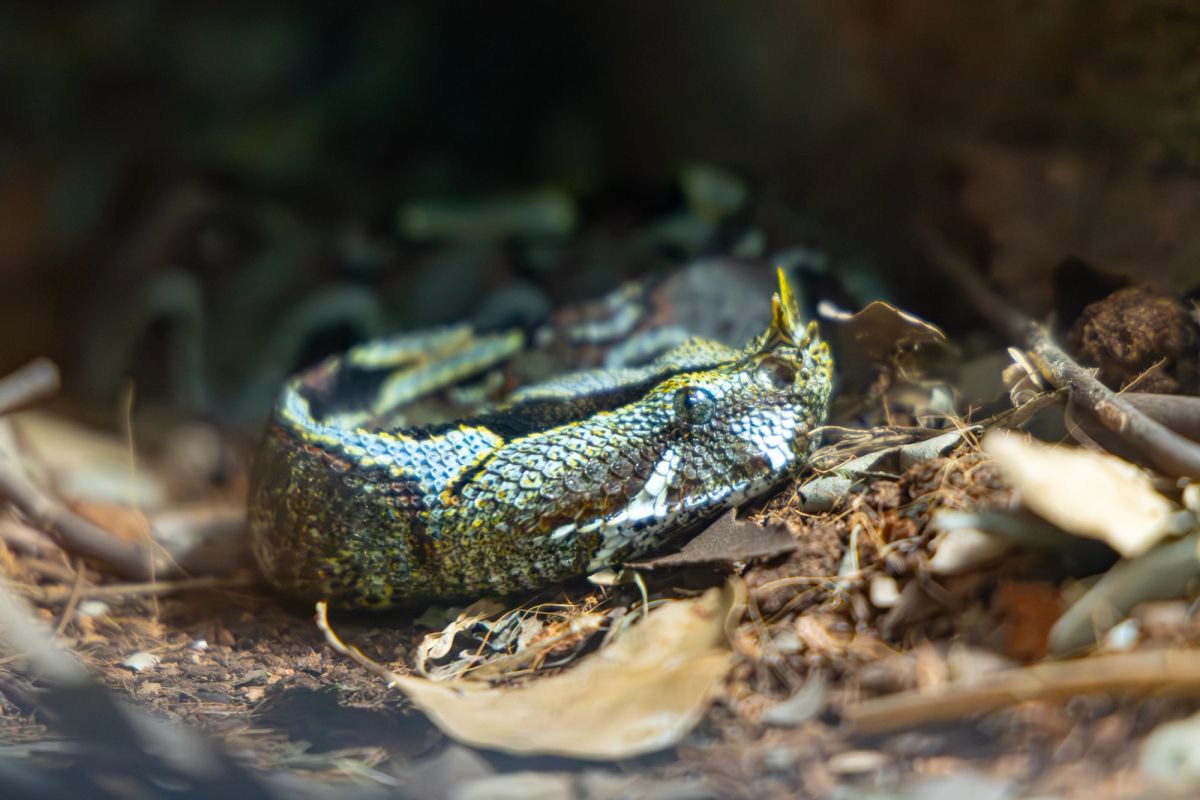
One of the most striking venomous snakes in the world, the Rhinoceros Viper is instantly recognised by its vivid colours, heavy body and horn-like scales on the tip of its nose. Often nicknamed the Rhino Viper, this remarkable African viper is famous for its bold pattern of blue, green, yellow, red and black markings, which help it disappear into the rainforest floor despite its bright appearance.
Rhinoceros Vipers are thick-bodied snakes with rough, strongly keeled scales and a broad, triangular head. Adults usually grow between 60 and 90 cm in length, although some individuals can exceed 1 metre. Their most distinctive feature is the raised scales on the snout, which give the species its common name.
Like all vipers, the Rhinoceros Viper is venomous. Its venom is used to subdue prey and is primarily haemotoxic, meaning it affects blood and tissue. Although this snake has an intimidating appearance, it is not an active hunter and usually relies on camouflage rather than confrontation.
When threatened, a Rhinoceros Viper may defend itself with a loud hiss or growl-like sound. This warning lets potential threats know to keep their distance. Another fascinating feature is the way it moves. Instead of the side-to-side motion many people expect from snakes, Rhinoceros Vipers can use rectilinear locomotion, a slow, caterpillar-like crawling movement that helps them blend in with leaf litter and move without drawing attention.
Guests visiting the Australian Reptile Park on the Central Coast can see this incredible species up close in a safe, educational setting. The Park is currently the only zoo in Australia where visitors can see Rhinoceros Vipers, making this a rare opportunity for families, children and reptile enthusiasts to learn about one of Africa’s most visually unforgettable snakes.
Habitat
Rhinoceros Vipers are found in tropical rainforests and swampy environments across Central and West Africa. They prefer damp habitats and are often found near water, including rivers, wetlands and forest streams.
This species spends most of its time on the forest floor, hidden amongst leaf litter, fallen logs and dense vegetation. Its bright colours may look easy to spot in a photo, but in dappled rainforest light the bold pattern breaks up the snake’s outline and helps it blend into the ground.
Rhinoceros Vipers are also strong swimmers and can climb when needed, although they are most often associated with humid forest-floor environments. Their secretive nature makes them difficult to spot in the wild, which is part of what makes seeing one at the Australian Reptile Park such a special experience.
Diet
Rhinoceros Vipers are ambush predators. Rather than chasing prey, they lie perfectly still and wait for an animal to come close enough to strike. This hunting style suits their heavy body, camouflage and patient behaviour.
Their diet includes small mammals, frogs, toads, birds and occasionally fish. Once prey is within reach, the Rhinoceros Viper can strike very quickly and use its venom to immobilise the animal before swallowing it whole.
This feeding strategy is an important reminder that venomous snakes are not simply dangerous animals. They are specialised predators that help balance ecosystems by controlling populations of other animals.
Reproduction
Rhinoceros Vipers give birth to live young rather than laying eggs. This is known as being viviparous, a reproductive strategy seen in many vipers.
Females can produce litters of young snakes, with numbers varying depending on the individual and environmental conditions. The young are independent from birth and already have the instincts, camouflage and venom they need to survive.
For families visiting the Australian Reptile Park, the Rhinoceros Viper is a great example of how different snake species can be. Some snakes lay eggs, some give birth to live young, some chase prey, and others, like the Rhinoceros Viper, rely on patience, camouflage, a powerful defensive hiss and a lightning-fast strike.
Rhinoceros Viper FAQs
Is a Rhinoceros Viper the same as a Rhino Viper?
Yes. Rhinoceros Viper is the proper common name for Bitis nasicornis, while Rhino Viper is a shorter nickname. Both names refer to the same venomous African viper.
Are Rhinoceros Vipers venomous?
Yes. Rhinoceros Vipers are venomous snakes. Their venom is used to subdue prey and can be dangerous, which is why this species should only ever be handled by trained professionals.
Where do Rhinoceros Vipers live?
Rhinoceros Vipers live in tropical forests and wet habitats across Central and West Africa. They are often found near rainforests, swamps, rivers, wetlands and other damp environments.
Can you see a Rhinoceros Viper in Australia?
Yes. Visitors can see Rhinoceros Vipers at the Australian Reptile Park in Somersby on the Central Coast of NSW. The Park is currently the only zoo in Australia where visitors can see this species.
Why is it called a Rhinoceros Viper?
The Rhinoceros Viper gets its name from the horn-like scales on the end of its nose. These raised scales give the snake a rhinoceros-like appearance and help make it one of the most recognisable vipers in the world.
Do Rhinoceros Vipers hiss?
Yes. When threatened, Rhinoceros Vipers can produce a loud hiss or growl-like defensive sound. This warning behaviour is used to discourage predators or threats from coming closer.
How do Rhinoceros Vipers move?
Rhinoceros Vipers can move using rectilinear locomotion, which creates a slow, crawling motion that can look a little like a caterpillar. This movement helps the snake travel across the forest floor while staying low and camouflaged.
What does a Rhinoceros Viper eat?
Rhinoceros Vipers eat small animals such as frogs, toads, small mammals, birds and sometimes fish. They are ambush predators, waiting quietly until prey comes close enough to strike.
How big do Rhinoceros Vipers get?
Most adult Rhinoceros Vipers grow between 60 and 90 cm long, although some individuals can exceed 1 metre. They are heavy-bodied snakes, making them look especially powerful for their length.
Are Rhinoceros Vipers aggressive?
Rhinoceros Vipers are generally secretive and rely on camouflage to avoid danger. Like any venomous snake, they can defend themselves if threatened. In the wild, they are best admired from a safe distance.
Why are Rhinoceros Vipers important?
Rhinoceros Vipers help maintain balance in their rainforest ecosystems by controlling populations of small animals. They are also valuable for education, helping people understand the diversity, behaviour and conservation needs of venomous snakes.