
Tiny Sunda has arrived after one of Australia’s rarest reptile breeding milestones.
There is a tiny new arrival at the Australian Reptile Park, and he is part of the largest lizard species in the world.
The Australian Reptile Park has welcomed a rare baby Komodo dragon hatchling, following only the third successful Komodo dragon breeding event in Australia. The milestone comes five years after the Park became the first zoo in the country to successfully hatch the species.
The hatchling has been named Sunda, pronounced soon-dah, after the Lesser Sunda Islands in Indonesia, where Komodo dragons still roam today.
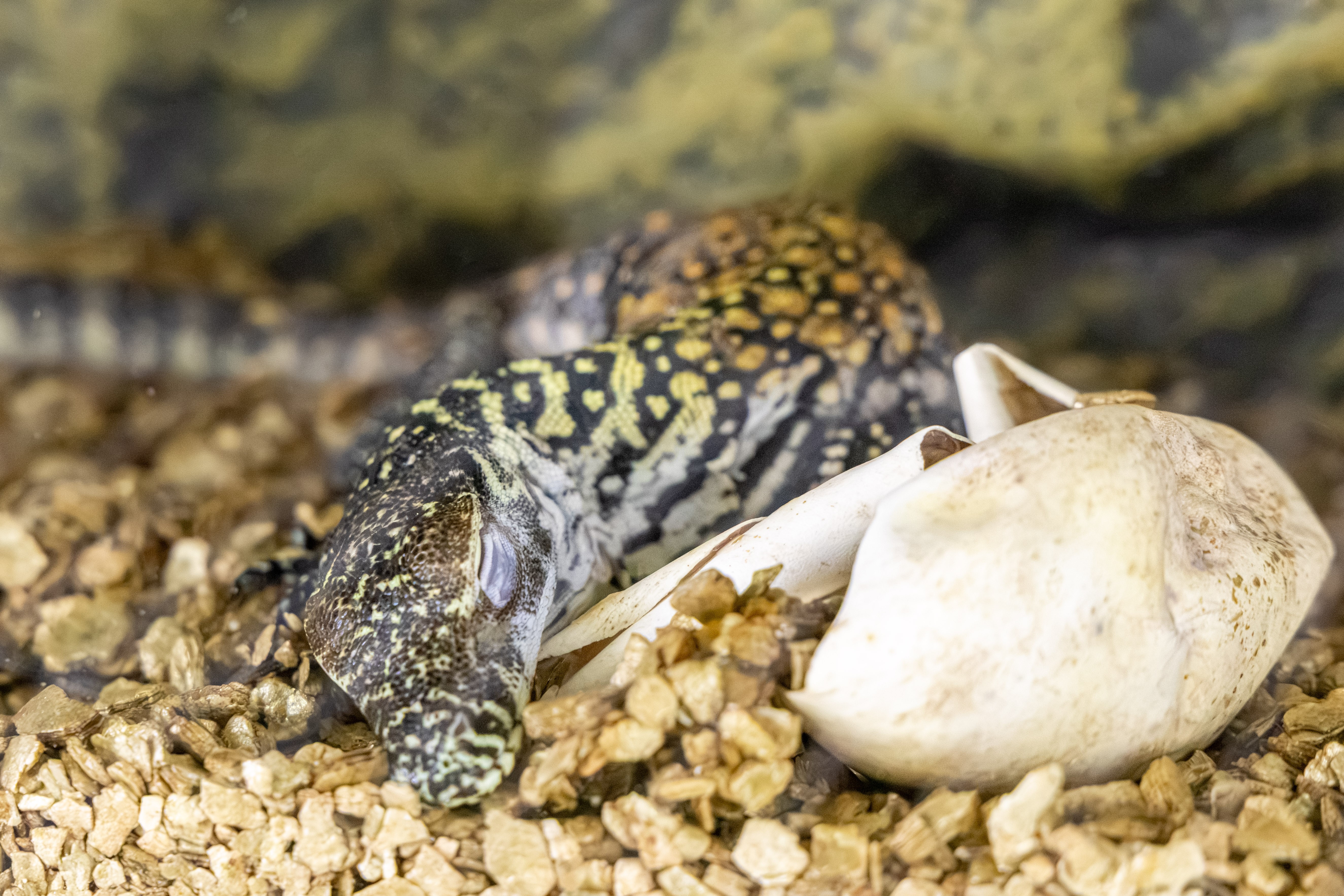
After spending almost eight months inside his egg, Sunda finally hatched over the weekend following months of careful monitoring by the Park’s dedicated reptile team.
The egg was the result of a rare off-season pairing between Sunda’s parents, Kraken and Daenerys. Keepers noticed signs that both dragons were ready for breeding and were stunned when the pair connected almost immediately, a process that can often take days.
Australian Reptile Park Operations Manager Brandon Gifford said the team could hardly believe what they were seeing.
"The moment I found out our little lizard was about to hatch, I cancelled all my weekend plans and set up in front of the incubator to watch it hatch,” said Brandon.
As Sunda’s hatching date approached, the team set up cameras and increased monitoring around the clock. Over the weekend, the first tiny slit appeared in the egg, signalling the start of a long and delicate hatching process.
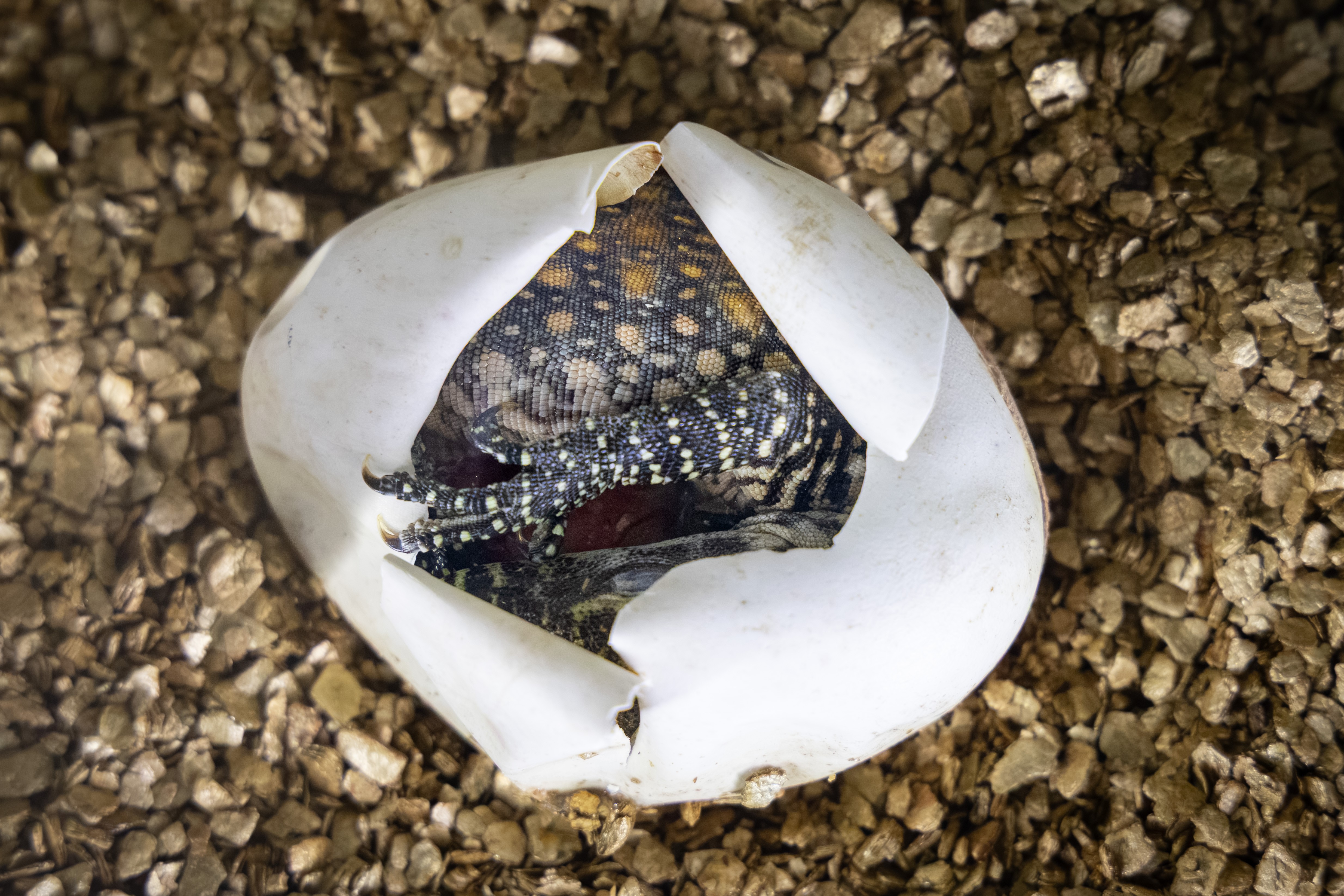
“It doesn’t get any more exciting than this,” said Brandon. “I’ve dreamed of seeing a baby Komodo dragon hatch out for my entire life, and it’s better than I could’ve imagined.”
The full hatching process took three days from the first slit in the egg to Sunda fully emerging. He then spent another day absorbing the remaining yolk, which provides vital nutrients and helps give hatchlings the strongest possible start to life.
Watching Sunda work his way out of the egg was an unforgettable moment for the team.
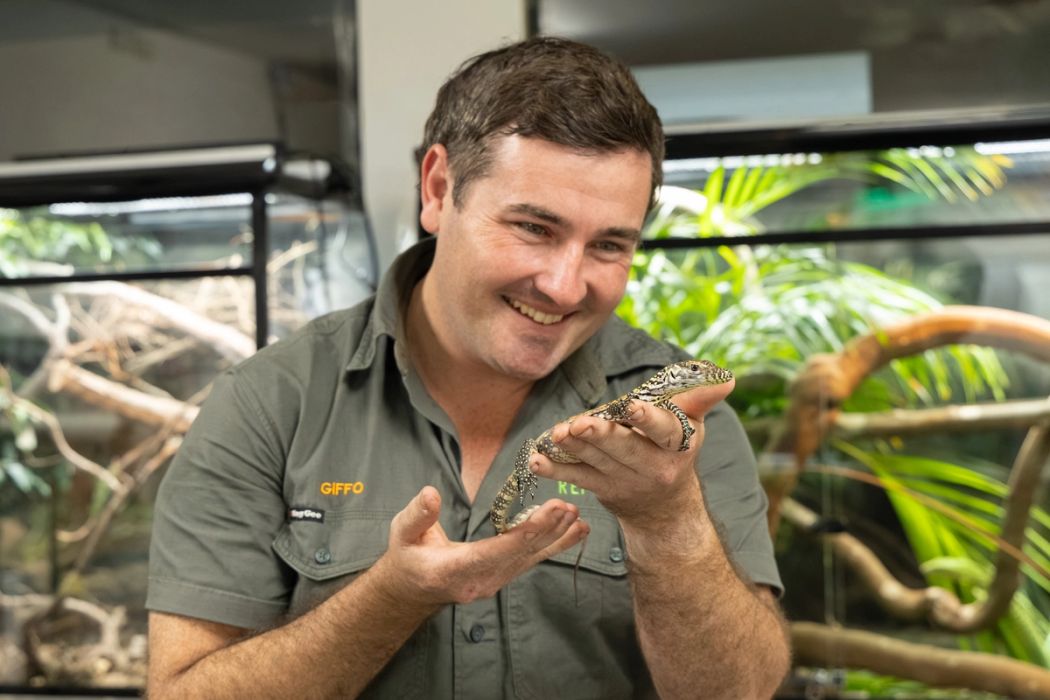
“It was a massive undertaking and the greatest battle of his life,” said Brandon. “For something so tiny, he showed an incredible amount of strength.”
Sunda is now healthy, alert and settling into a custom-built enclosure designed especially for a young Komodo dragon. Measuring just 30 centimetres long, the tiny hatchling is already showing all the right behaviours for his age.
“He has been doing everything we’d expect,” said Brandon. “He’s been climbing up and spending a lot of time at the top of his new Ficus tree, basking under his heat lamp. He is very happy.”
While Sunda may be tiny now, he is part of the world’s largest lizard species. In time, he could grow to almost three metres in length and weigh up to 90 kilograms, just like his father, Kraken.
Komodo dragons are native to a small number of Indonesian islands and are listed as Endangered on the IUCN Red List. With fewer than 1,400 individuals estimated to remain in the wild, every successful breeding event is an important achievement for the species.
Sunda is now on display in the Australian Reptile Park’s reptile displays, giving visitors the incredibly rare chance to see a baby Komodo dragon in person.
Visitors are invited to come and see Sunda while he is still tiny, learn more about this remarkable species and celebrate an exciting conservation milestone for the Australian Reptile Park.