Quick Facts
- Scientific name: Notomys alexis
- Family: Muridae (native rodents)
- Where they live: Arid and semi-arid regions of central and western Australia, including South Australia, Western Australia, the Northern Territory and western parts of Queensland and New South Wales
- Size: Body around 95 to 115mm; tail around 130 to 150mm
- Weight: Around 30 to 45g
- Lifespan: Around 2 to 5 years in the wild; longer in captivity
Description
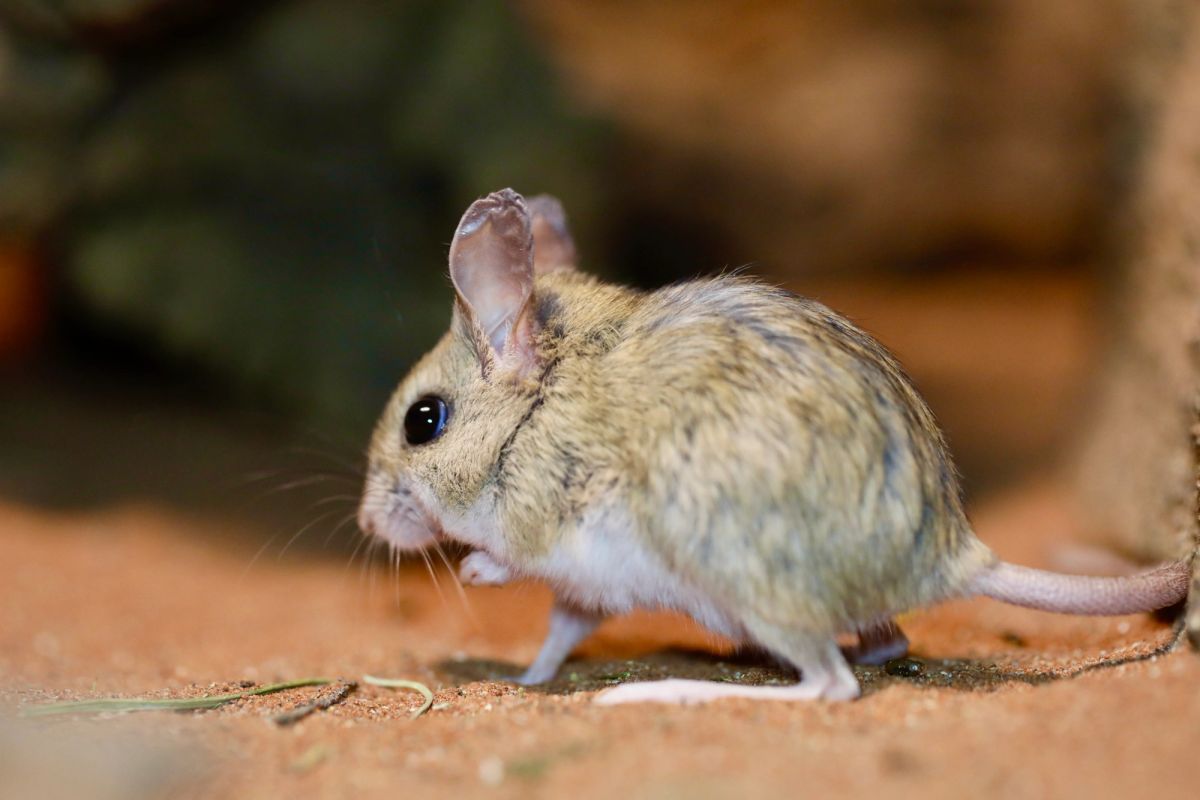
The Spinifex Hopping Mouse is a small, sandy-coloured rodent with soft fur that ranges from pale fawn to cinnamon-brown on the back and white or cream underneath. Its large, dark eyes are well suited to its nocturnal lifestyle, and its oversized ears help it detect both predators and prey in the darkness of the desert night.
Its most distinctive features are its large, powerful hind legs and long, tufted tail. Rather than scurrying on all four legs like most mice, the Spinifex Hopping Mouse moves by bounding bipedally, using only its hind legs in a movement that closely resembles a miniature kangaroo. The tail acts as a counterbalance during movement and helps the animal steer and stabilise itself at speed.
One of the most remarkable things about this species is its ability to survive without drinking water at all. Its kidneys are highly efficient at concentrating urine, meaning it can extract all the moisture it needs directly from seeds and other food. This adaptation makes it one of the most drought-tolerant mammals in Australia.
It is important to note that the Spinifex Hopping Mouse is a native Australian species and is entirely separate from introduced pest rodents such as the house mouse. It is a valued part of Australia's desert ecosystem and has lived here for millions of years.
Habitat
Spinifex Hopping Mice are found across a wide band of arid and semi-arid Australia. Their range covers central Australia, much of Western Australia, South Australia, the Northern Territory and western parts of both Queensland and New South Wales.
As their name suggests, they are strongly associated with spinifex grasslands and sandy desert environments. They are commonly found in areas of loose red sand, sandplains, dunes and mulga scrub. Spinifex tussocks provide cover, nesting material and a source of seeds.
During the heat of the day they retreat underground into burrow systems, which help regulate temperature and reduce water loss. The burrows are often shared between small family groups. At night they emerge to forage, relying on their speed, agility and sensitive hearing to avoid predators such as owls, snakes and introduced cats and foxes.
Their populations are closely tied to rainfall. After good rains, plant growth increases and food becomes abundant, triggering a population boom. In drought conditions, numbers drop sharply. This boom-and-bust cycle is a normal feature of desert ecology.
Diet
Spinifex Hopping Mice are omnivores, though seeds form the core of their diet. They also eat green plant material, roots, insects and other invertebrates when available. Their ability to switch between food sources depending on seasonal conditions is part of what makes them so well suited to an unpredictable desert environment.
Seeds from grasses, including spinifex, are particularly important. The Spinifex Hopping Mouse uses its front paws to hold and manipulate food, processing seeds efficiently before storing or consuming them.
Insects and other invertebrates provide a valuable source of protein, especially during breeding periods when nutritional demands are higher. The Spinifex Hopping Mouse will also take advantage of ephemeral plant growth after rain, eating fresh green shoots and flowers that would otherwise be rare treats in the desert.
Because they obtain all the water they need from their food, Spinifex Hopping Mice do not need access to standing water. This is an exceptional adaptation that allows them to occupy habitats where few other mammals can survive.
Reproduction
Spinifex Hopping Mice are fast reproducers, which helps their populations recover quickly after drought or predation pressure. When food and water are plentiful, they can breed year-round.
Gestation lasts around 38 days, and litters typically contain between one and five young. The young are born hairless and helpless, and are weaned at around four weeks. They reach sexual maturity quickly, sometimes as early as 60 days of age, which contributes to the rapid population growth seen in good seasons.
Breeding activity is heavily influenced by environmental conditions. In dry years, reproduction slows or stops altogether. After significant rainfall, breeding can increase dramatically as food resources become abundant. This responsiveness to conditions is a key survival strategy for a species living in such an unpredictable environment.
Spinifex Hopping Mouse FAQs
Is the Spinifex Hopping Mouse a native Australian animal?
Yes. The Spinifex Hopping Mouse is a true native Australian rodent, entirely separate from introduced pest species like the house mouse. It has lived in Australia for millions of years and is an important part of the desert ecosystem.
Where do Spinifex Hopping Mice live in Australia?
They are found across the arid and semi-arid regions of Australia, including central Australia, most of Western Australia, South Australia, the Northern Territory and western parts of Queensland and New South Wales. They prefer sandy desert environments and spinifex grasslands.
Do Spinifex Hopping Mice drink water?
No. Spinifex Hopping Mice do not need to drink free water at all. Their kidneys are highly efficient at conserving moisture, and they get all the water they need from the seeds, plants and insects they eat. This remarkable adaptation allows them to survive in some of Australia's driest habitats.
Why do Spinifex Hopping Mice hop?
Spinifex Hopping Mice have evolved large, powerful hind legs that allow them to move bipedally, similar to a tiny kangaroo. Hopping is an energy-efficient way to travel across open desert terrain, and it also allows the animal to move quickly when escaping predators.
How big is a Spinifex Hopping Mouse?
The body is around 95 to 115mm long, with a tail of around 130 to 150mm. They weigh between 30 and 45 grams, making them a small but very capable desert survivor.
What do Spinifex Hopping Mice eat?
Their diet includes seeds, grasses, green plant material, roots, insects and other invertebrates. Seeds from spinifex and other desert grasses make up the bulk of their diet, though they will eat a wide variety of food depending on what is available.
Are Spinifex Hopping Mice nocturnal?
Yes. Spinifex Hopping Mice are nocturnal, spending the heat of the day in underground burrows and emerging at night to forage. Their large eyes and ears are well suited to finding food and avoiding predators in low-light conditions.
Can you see Spinifex Hopping Mice in NSW?
Yes! Guests can see Spinifex Hopping Mice at the Australian Reptile Park in Somersby on the Central Coast of NSW. This is a great opportunity to learn about one of Australia's most adaptable and fascinating native rodents.
How long do Spinifex Hopping Mice live?
In the wild, most Spinifex Hopping Mice live around two to five years. In captivity they tend to live longer with stable food, water and shelter.
Are Spinifex Hopping Mice endangered?
The Spinifex Hopping Mouse is currently listed as Least Concern on the IUCN Red List, meaning the overall species is not at immediate risk. However, like many native Australian rodents, it faces ongoing threats from habitat degradation and introduced predators such as feral cats and foxes.